Why Your DIY Website Feels Free (But Is Quietly Costing You)
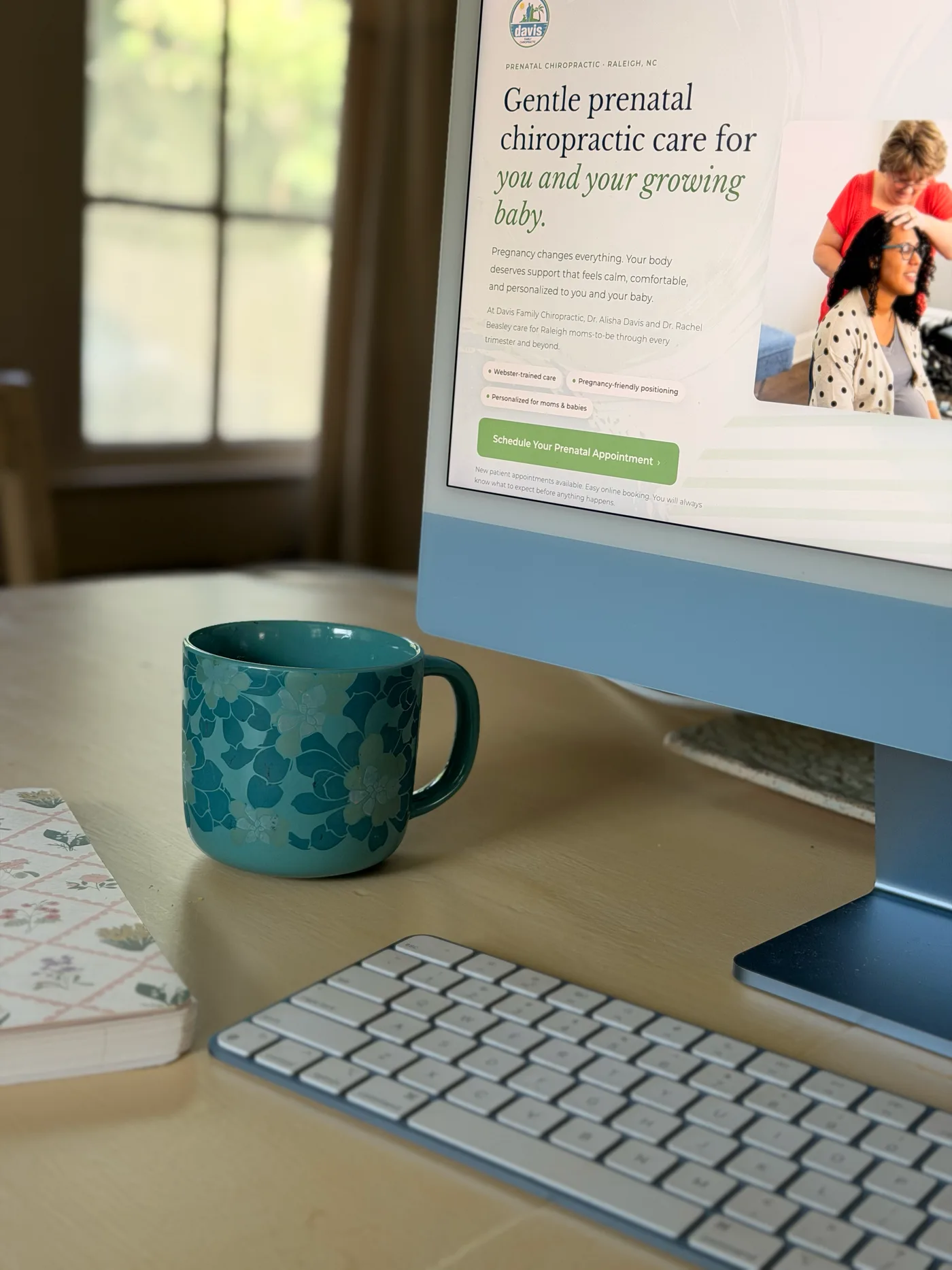
A DIY website feels free because you never get an invoice for it. But you do pay - in lost trust, wasted hours, and good-fit clients who quietly click away. The real question was never "what does a website cost?" It's "what is the wrong one costing me?"
Why does a DIY website feel free?
Because the bill never arrives all at once.
When you build it yourself, there's no big number to flinch at. You spent a weekend (okay, several), wrestled a template into place, and got something live. That was a genuinely smart move when you were starting out - you needed to exist online, and you made it happen without spending money you didn't have yet.
I'm not here to make you feel bad about that. Scrappy is good. Scrappy is how most real businesses start.
But "free" and "no cost" aren't the same thing. The cost of a DIY site doesn't show up on a card statement. It shows up everywhere else.
So what is it actually costing you?
Four things, usually - and none of them announce themselves.
- Trust. A site that's almost polished does something quietly damaging: it makes people hesitate. They can't say why, but something feels a half-step off, and in that half-step they wonder if the rest of your work is a half-step off too. It isn't. But they don't know that yet.
- Clients you never hear about. This is the expensive one. The people who land, feel that hesitation, and leave don't email to tell you. There's no notification for the one who got away. You just never meet them - and it's often the exact person you'd have loved to work with.
- Time. Every hour spent fighting your template, nudging a button, re-uploading a photo, is an hour you're not doing the work people actually pay you for. DIY isn't free. You're paying for it with your own afternoons.
- Clarity. When you build it yourself, it's almost impossible to be objective, so you add. A little here, a sentence there, one more thing you do. And a website that tries to say everything ends up saying nothing. A blurry message is a slow no.
Free isn't free. It's a bill paid in slow leaks.
Here's the reframe: a DIY site isn't something you got for nothing. It's a cost you've chosen to pay in small, constant leaks instead of one clear number.
A real website flips that. It stops being an expense and becomes an asset - something that works while you sleep, says the right thing to the right person, and earns back what you put into it. You're not spending money on a website. You're plugging the leaks.
Is DIY ever the right call?
Yes. Honestly, sometimes it's exactly right.
If you're testing an idea, validating whether anyone wants the thing, or genuinely in your first months, a simple DIY site is a perfectly good call. Don't pour thousands into a business you're still figuring out.
The problem isn't starting with DIY. It's staying there long after you've outgrown it - when your work has leveled up, your prices have grown, and your website is still quietly describing the version of you from two years ago.
If that last line landed a little too close, that's worth paying attention to.
So what now?
You don't have to overhaul anything today. But it helps to actually see where your site is leaking instead of just feeling that it is.
Want to see where your site is leaking?
The Report of Findings is a $197 walkthrough of your website. I'll find what's quietly costing you and tell you the one thing to change first, delivered within 48 hours.
Get the Report - $197 →